The End.
Education as we have known it in England is over (even if only temporarily). While COVID-19 continues to wreak havoc on our communities, it has also shone a light on the flawed underpinnings of our current model of education.
The belief that competition and basic information are the primary drivers of improvement and that the logic of the free market in business could and should be applied to schools – has had its day. And its day is done.
A school is not a business and children are not commodities.
And while some schools – often heavily advantaged prior to the competition itself – have seemingly benefited from increased autonomy, parental choice and ‘comparable measures’ like standardised tests and Ofsted frameworks, they are far outweighed by the hidden and disastrous costs.
We don’t need to look very far to see the flaws inherent in the business model. While the average consumer feels satisfied at the quick delivery and low prices of giants like Amazon or Asda (Walmart), we ignore the high cost associated with this type of survival of the fittest – the outsourcing of jobs to countries with abhorrent labour laws, environmental standards and child labour practices, or the avoidance of tax in the countries in which they operate.
There is a dark side to everything. The high cost of low price. After a while, we forget about the costs because we’ve normalized them.
Just like the high cost of low prices, parents in England have similarly been lulled into a false sense of belief about the effectiveness of our own education system and the costs associated with operating this way. Many parents feel satisfied with the current state of things without ever being told the deeply damaging impact it is having on the community next door.
Our schools are suffering the disastrous consequences of high stakes market competition: an inability to recruit in to teaching, sky-high attrition, low staff morale and job satisfaction, narrowed curriculum, over-reliance on standardized test data, and overly-simplistic quality frameworks shown to dominantly serve communities that are already heaving with advantage.

What are the opportunity costs? What are we missing out on as a nation when we have a small pool of applicants, teachers leaving in record numbers every year, a generally unhappy workforce that feel misaligned with why they became teachers in the first place, coupled by clear data that shows our test scores and inspection frameworks do largely nothing but celebrate or denigrate your post code?
The answer is a lot. You don’t have to look too far across the pond (and I’m not talking about the USA) to see what education looks like when academic prowess is balanced carefully with pupil passion like sport, the arts, music, drama or activism. Or to see how fulfilled and motivated teachers and school leaders are because they are valued and trusted and the incremental gains that adds to the teacher-pupil relationship. Or to see the confidence, hope and graduation rates to entry in to higher education and/or the workforce from all walks of life. Where labels are for tins, not people.
Our schools, leaders and teachers deserve better. Our parents deserve better. And, most importantly, our children deserve better.
We shouldn’t have a state education model where only a very small few get to the top – we deserve a model that promotes the collaboration, creativity and success of everyone. It should not be survival of the fittest – it should be success for all. It is not a competition – it is not a business – everyone should make it.
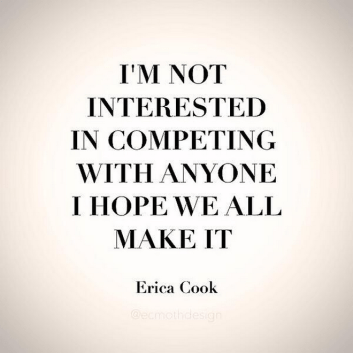
And we do not need to accept the old model anymore.
We have an opportunity to put all of our flawed and failed notions to rest. We can awkwardly continue to rub sticks together in an attempt to make fire, petulantly shouting at onlookers when ‘it works’ as they awkwardly put their lighters back in their pockets. Or we can put our sticks down, stand up, brush ourselves off, and begin to move forward.
And this is where we must begin – with the end.
*****
The Beginning.
Many people get to this stage and ask what the alternative is. And this should be the exciting bit. There are models from around the world that we can use as a starting point. Decades of educational system and leadership literature to draw upon. Nothing that anyone else is doing will fit us perfectly. And nothing that we will choose will be perfect. So why change?
We change because the world has evolved. What we know and understand about children, community, learning, the purpose of schooling has multiplied exponentially. And the model we have in place is based on old knowledge.
Accountability has its place. This is public money and we are caring for society’s most precious. Testing has a place – but as a servant, rather than a master. And a focus on system/school/professional improvement has its place – not from an inspectorate on high; but between schools (teachers), for schools (teachers) and by schools (teachers). But these principles must serve the system, not drive it.
The value in things like punitive accountability and individualistic measures are wrong and past their expiry. I built my school, despite the relentless pressure to compete, on the following principles.
That, in order to grow an Incredible School, served by Incredible Leaders & Teachers, in service of an Incredible Community, we must focus on:
*Building the capacity of all professionals through collective responsibility, teamwork and collaboration. No longer can we afford to endure a system of each school against the other or each teacher against the other.
*Developing a moral commitment and inspiration in all staff, supported by policy and leadership. Simply filling empty buckets is not what most of us got in to teaching for. It is time to refocus on what education can truly do. Start with WHY.
*Greater professional agency inside a system of support, development and challenge. This is a gradual release over time supported by coherent and aligned policy and development.
*Curriculum & Pedagogy that are concerned with both curricular outcomes and deep personal development rooted in social justice. Getting great test scores needs to be equally weighted with developing incredible young people that are resilient agents of change in their own lives and communities. What we teach and how it is taught/learned are equally important.
*Performance metrics that look beyond performativity and deliverology to deep learning, ongoing professional development and professional inquiry. Teacher led learning and leadership are at the heart of this movement.
*School-to-School, Leader-to-Leader, Teacher-to-Teacher support & development models free from punitive intervention. We need to eliminate anything that screams low trust and high threat.
If COVID-19 has taught us anything, it is that teachers and school leaders don’t need threat or verification to perform. There are no silver bullets. No one-stop-shop for improvement.
Hargreaves & Fullan discuss what this could look like on the ground, at school and teacher levels. My own school – Three Bridges – took this advice nearly a decade ago and have only gotten stronger since. We now support many other schools in adopting these type of principles.
Guidelines for the School Agenda
1 – Promote Professional Capital
2 – Know Your People: Understand their Culture
3 – Secure Leadership Sustainability & Stability
4 – Beware of Contrived Collegiality
5 – Reach Beyond Your Borders
6 – Be Evidence Informed, Not Data Driven
Guidelines for Teachers
1 – Become a True Professional
2 – Start with Yourself: Examine Your Own Experience
3 – Be Mindful
4 – Build Your Human Capital Through Social Capital
5 – Push and Pull Your Peers
6 – Invest in and Accumulate Your Decisional Capital
7 – Manage Up: Help Your Leaders Be The Best They Can Be
8 – Take the First Step
9 – Surprise Yourself
10 – Connect Everything Back to Your Pupils
I am not completely sure what the future looks like. I know it cannot go back to what it was. And I feel a sense of excitement at what it could be. This pandemic – while horrible and rotten and very much no good – has provided us with an opportunity.
Whatever it becomes – it will need to be shaped by us all – together.
This is the beginning.
#TeachersWithoutBorders
 No Ordinary Classroom
Oh fantastic article. We have such an opportunity before us to make such radical changes! We must not let this slip through our fingers.
LikeLiked by 1 person
A wonderful read. Post Covid-19, I am excited by the future as long as the politicians give teachers/educators/ leaders the voice to really focus on excellence rather than stifle us by compliance.
LikeLiked by 1 person
Interesting blogpost, thank you. But I tripped up at the phrase ‘You don’t have to look too far across the pond’… Does this refer to the public school system in the US? If not, where?
LikeLiked by 1 person
Canada was in my mind…but there are other similar jurisdictions in the world.
LikeLike
Thanks Jeremy, this is inspiring reading within what intense times. Although challenging, it’s important that we still look at the bigger picture and firm up what we, as educators want to achieve within our learning communities. I really like the guidelines you have created – they provide the trunk of the tree staff and the community can keep coming back to.
LikeLiked by 1 person
Wonderful. I agree wholeheartedly, and have been frustrated at how this often falls on deaf ears from those above. Currently trying to argue why some of the Kreston Benchmarks are not suitable for the school I lead. Aaaarrrgh!
Thank you – we shall keep banging on until we break through. I find your writing inspirational and a joy to read – you express your ideas clearly (and I’m not even ticking that off an assessment criteria sheet).
LikeLiked by 1 person
A fantastic article Jeremy. Now is certainly the time for change and I am keen to be part of that future. Collaborating with teachers and leaders to work on their thought processes as they grapple with the challenges they face and with a focus on the difficult to reach 20%. The Ed community can do this and this represents a real platform for change. Count me in!
LikeLiked by 1 person
The sentiment behind this article is almost perfect, and readily apparent to anyone who has taught in England for any longer than even just a couple of years…
However, as with many other sectors of society, the fight to establish change is going to be incredibly difficult, mostly DUE to the inevitable reaction this pandemic would produce in those who sought to profit from said sectors in those ‘normal’ times prior to it.
It would be my contention that neoliberal capitalistic forces that have perverted the very premise of what education means are what it is we are going to be battling and the current regime would happily pursue the kind of ‘Shock Doctrine‘ disaster capitalism seen in the past to milk confusion for all it’s worth.
Buckle up because it’s going to be a bumpy ride… but our destination will be all the more beautiful as a result.
LikeLike
[…] Can the current difficulties be an opportunity? […]
LikeLike
As many of us are and have been squinting through outmoded lenses consisting of age old unequal and unfair systems of functioning. It is heartening to read thoughts that provide a fair and more equal set of lenses for us to see this as a time for a change for the greater good. If not now then when? Jeremy thank you for clear cogent thinking.
LikeLiked by 1 person
Thank you for such an inspiring post – I’m in and believe this can happen 🙂
LikeLiked by 1 person
To challenge the system in education refs a coordinated approach. Individual schools alone can help change its own pupils but is constantly up against the whole system, which obviously has more power and influence. It needs a whole profession approach but our teaching profession is so fragmented! Maybe that is set up so it can’t unite to challenge the “System”! Meanwhile Jeremy and other deep thinking leaders are working from within and must be applauded for their efforts. Well done you guys keep up the good fight!
LikeLiked by 1 person
I agree with everything you say and will print it off so that I can work out how to reference your great ideas Jeremy! All power to your elbow and I hope you and your family are keeping safe and well. Best wishes, Jen
LikeLiked by 1 person
I really enjoy reading these and catching up on Three Bridges. Since I left in 2015 it has become so, so amazing and I am incredibly proud of it. I’m in college now, just out of High School, and although I’m studying performing arts I can take some of these Ethos’ and ways of looking at education and use them for my own benefit as a person and creative. I always took so much from Three Bridges as a person with the help and opportunities there, and it seems I still am; thank you 🙂 Shae (was in Uranus in 2012/13)
LikeLiked by 1 person